
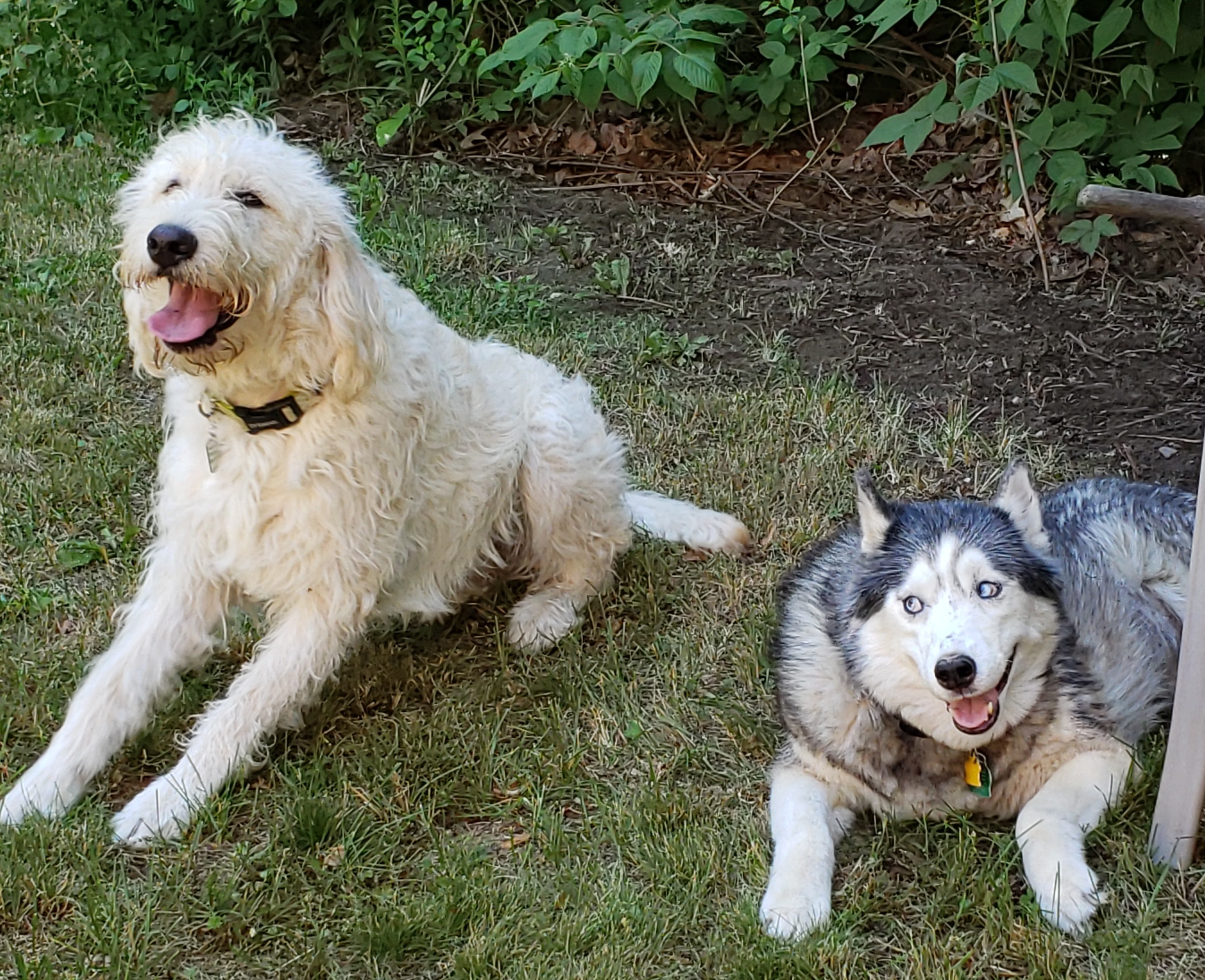
Successful introduction of an additional dog in the home can happen for a variety of reasons. The idea that the existing dog needs a canine companion is the most common. One human family member may want a companion that is more their special friend. An active family member may now need a younger dog to do certain activities with. A lot of good reasons exist for the introduction of a new canine member into one’s home. Be aware though. You must work to maintain a harmonious relationship between the members of your canine family.
The fantasy or expectation is that the dogs will get along famously, if they seem to get along right away. Owners assume that little work or oversight will be needed to keep the initial relationship as is. Likewise, if a dog dislikes another dog on the first day, it’s assumed they will never get along. Either case could end up as expected MAYBE, but there is a lot more at play than the first impression. In general, potential owners assume if they get a young puppy, that puppy will grow into his/her position without conflict. This is also not necessarily true. So many factors will influence how a multiple dog relationship goes. If owners are given the right tools and knowledge, this relationship has an excellent chance of working out an amicably. There are very few cases in which a situation is just not going to work with work and preparation.
Here are some things to think about before bringing your additional canine companion home:
- Will your incumbent dog be likely to enjoy this addition. In other words, do they generally enjoy the company of other dogs. Alternatively, have they made it clear to you that they do not enjoy other dogs. It is not fair to your existing dog. You shouldn’t put this additional pressure on them if they are just not going to like it.
- Only adopt any dog when you have the time, energy, and resources to care for them properly. Adopting dogs during stressful times such as the holidays or personal stress is never a good idea.
- The incumbent dog should have a skill set to a standard in basic training. Dogs will not know via osmosis or intuition what you want them to “not do”. It is so much easier to have a way to tell them to do something. Two untrained dogs coming together is a bad idea.
- Training the additional dog should start immediately and separately from the incumbent dog.
- Total freedom for a new dog should never be allowed.
- Start off on the right foot with boundaries and rules in place for both dogs.
- Know how to read your incumbent dog’s signals in body language and mannerisms. Observe and start to know the language of the canine addition. It may well be drastically different, and with time and care, you will begin to know this dog as well.
- If you are not sure what you are looking at, assume the worst. Always better safe than sorry.
- Do not leave them alone unsupervised. It’s crucial to understand both dogs in a multiple dog context. You must know their ability to resolve conflicts before you consider leaving them alone unsupervised. Some breed fanciers will not leave their dogs alone unsupervised at all. That can be stressful in the future for a pet dog household.
- Transporting home-Be sure to pick up the new dog only or have crates ready in your car. Driving with two dogs loose that are not sure they like each other yet can end up being a disaster.
It is important to look for things that stand out and suggest that an amicable relationship is just NEVER going to occur:
- Dogfights that show a total lack of bite inhibition or bites in dangerous areas.
- Absolutely no signs of like or affection for the other canine. I am not talking about dogs that amicably ignore each other until the relationship is established. What I am talking about when it becomes real obvious that there are going to be NO friendly interactions.
Special training considerations in multi-dog homes:
- Commands-I use this general rule in my multi dog household. Commands not started with the dog’s name mean that all dogs in my voice range are expected to obey. At least this applies to the ones that have been trained on this rule. Commands that start with a name, mean that specific dog needs to obey the command.
- Release words-Release words that start without a dog’s name first, mean all dogs within my voice range may release. Release words that start with a specific dog’s name, mean that only the dog indicated may release.
- Both 1 and 2 are things that must be taught to your dogs thru training exercises.
- Remember a small altercation turns into large problems if not dealt with quickly. If you don’t know what to do, seek professional help immediately. It will save you a lot of headaches and/or heartaches.
Getting another dog will be a real joy. You just need to be careful and thoughtful about it. You should put the work into all the dogs in your pack.
Leave a Reply