
Are your dogs having problems getting along? We can help. Call us at 207-361-4395 or email mannerlymutts.rubin@gmail.com.
What Affects Canine Pack Behavior?
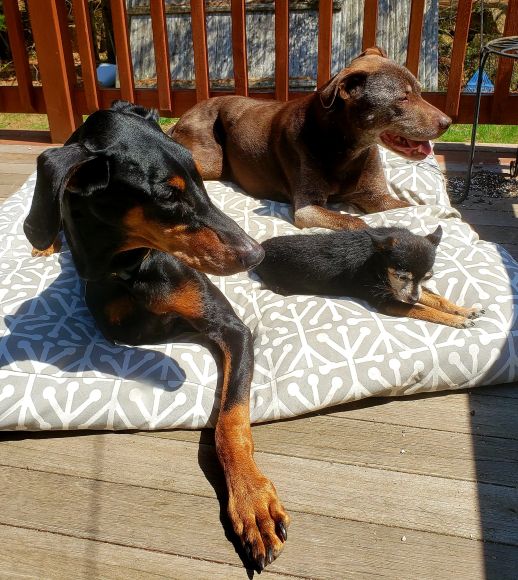
Some dog training behaviorists and professional dog trainers try to dispute canine pack theory as a hierarchy structure. This article is not about those pack theory arguments. Canine group dynamics are relevant when dogs and/or humans are around each other. I first became aware of how a group’s dynamic changes when I volunteered to train Dobermans at Doberman Rescue Unlimited. During group dog training sessions, a new dog entering the group would change the focus of most dogs. This can also happen in our domestic households. The introduction or loss of a dog can change behaviors and relationships in the group. Various other changes in environment or living circumstances can also affect the dog pack dynamic. These can be positive or negative changes. The following can affect or change the dynamic of canine pack:
Addition or loss of canine family member
Addition of or loss of human family member
Aging and geriatric changes in a canine member
Not compatible temperaments or personalities
Socialization history of canine members including any past trauma
Lack of training, rules, and boundaries
Lack of leadership and supervision
Dog owners not picking up on certain canine communications and finding solutions if needed
Environmental changes such as moving and change in environment
Hard wired genetics such as prey drive, herding, or guarding
Dogs communicate their approval or annoyance with each other in a foreign language, from our perspective. Their language includes body language, eye contact, mouth position, and tail movement. They use other various methods too. Also be aware that their communication can have different meanings per individual dog. Dog owners can be largely unaware of these unless they deal with groups of dogs regularly. When owners miss these communications, they may also miss problems brewing underneath the surface. Then unwanted interactions and behaviors can either start immediately or grow over time.
Some examples of unwanted behaviors that can show up are the following:
Resource guarding of food, toys, dog owner, another canine, or territory.
Personality changes like fear, timidity, or reactivity
Dog fights either mutual or one sided
Housebreaking accidents
Marking behaviors
Destructive behaviors
Dog owners can greatly influence their canine pack’s behavior. They can manage relationships to avoid pitfalls. These actions can prevent the above behaviors. Prevention of any negative incidents is the best tool for pack maintenance. When something negative happens especially early on, this erodes the trust between your dogs.
Tips for Maintaining a Peaceful Pack:
Ideally your current dog would be trained in basic obedience
Learn about dog communication with body language
Have a dog training or puppy training plan for your new dog and/or existing dog
Supervise your dog’s interactions together and get involved if you need to (ideally before a negative interaction)
Crate train your dogs and use the crate when the dogs are not supervised
Have a feeding, walking, and letting outside routine
Have some special alone time with each of your canine pack
Meet the special needs or your individual canine pack members (some may have more energy, and some may need quiet alone time)
Know, work on, and manage each individual dog’s triggers and personality quirks
Know what appropriate play and corrections look like
Don’t ignore signs trouble by being proactive and making a plan
Be aware, relationships can change within your dogs’ pack, and it doesn’t mean you need to throw in the towel. It may mean you need some help to evaluate exactly what is going on. Some are easy to solve, and some are more challenging. That is not to say that there are not sometimes really wrong matches in dog relationships. Dogs who have lived together for a long time are usually salvageable. Sometimes not getting another dog or re-homing the new dog may be the right decision. Not every individual dog personalities are going to get along. Some dogs are happier being an only dog and are not suited to a multi dog situation.
Whether you need puppy training, board & train, or private dog lessons, we’ll help your dog become calmer, happier, and more focused. You can talk to us for free at 207-361-4395 or email us at mannerlymutts.rubin@gmail.com
Leave a Reply